Today I have been pondering the power of words.
I am entirely uninterested in toxic positivity. However, I am aware of the power of our thoughts and the physiological impact they can have on the body and symptom experience.
This is particularly relevant in a body that is under the influence of dysautonomia (in my case POTS). A few years ago, even reading that line about “the power of our thoughts” would have sent my heartrate off the charts from how dangerously close it sounds to “it’s all in your head”. My heartrate response would not have been because I was anxious or overreacting. But because my emotional state has real time impact on my nervous system, which the autonomic nervous system is a part of, and which plays a starring role in the dysregulated aspect of my dysautonomia/POTS.
Did you keep up?
If so, then I am guessing you have personal or professional experience in this area. Now if I lost you there, then not to worry, this isn’t about the underlying complexities of dysautonomia.
It is about the power of words and knowledge.
Let me relate this to something more familiar… like an asthma attack.
[**Timely reminder that this is a blog, and is absolutely not medical advice**]
It is an analogy I can get my cloud filled brain around so I will share it… as long as you please promise to remember this is a personal reflection NOT MEDICAL ADVICE… disclaimer done and repeated, now on with the asthma analogy!
Have you ever had or supported someone through an asthma attack?
If so, you may already be aware of the importance of staying calm. In fact, it is critical! Avoiding anything that causes additional distress can have an outcome influencing impact. I understand this in relation to asthma, I’ve seen the power of simple shifts in action. For example, I personally prefer wording that focuses on lengthening the exhale. As opposed to being told to take a deep breath when unable to, which can induce panic and further exacerbate the situation. Something we want to avoid because…
Keeping calm is key!
So much so, that in most asthma first aid advice, such as this one staying calm has been step number one.
Now, I would avoid trying to calm someone having an asthma attack by telling them to “just breath” or “stay calm”. Instead, I would demonstrate calm and help direct them to breathe with actionable steps that break it down. Ideally, of course I would refer to their asthma action plan and provide medication to open their airway (take note of this point for future reference), but for the sake of the analogy lets skip the lifesaving medication part.
So aside from medication what would I do to try to help them stay calm and breathe?
I’d provide support and reassurance:
“I’m here with you”. “The ambulance is on the way”. “Can you focus on the exhale? Try making your breath out a little longer”.
I would demonstrate slow steady breathing myself, occasionally breathing in time with their exhale, lengthening mine slightly to give them a guide to focus on. I would connect with them in whatever way is most supportive to their nervous system. With a gentle touch, hand holding if that supports them, or with distance if that is what helps them feel calmer.
In the context of asthma, I think most people (and certainly any practitioner worth their salt) would know:
As much as staying calm and reducing nervous system overload is hugely important; they still understand that IT IS NOT ANXIETY OR PANIC THAT IS CAUSING THE PROBLEM. AND TREATMENT OF THE UNDERLYING CAUSE IS VITAL. [Read more about “Asthma, Anxiety and Depression” here.]
Did you remember? That was the “for future reference” moment. My attempt at driving home the important point: giving inhalers or treatment when needed, is going to be more effective than words!
In my opinion, the same is largely true for dysautonomia. As much as it should be part of management to stay calm and regulate the nervous system… it is not the whole picture or the answer in and of itself. The underlying cause should be treated for optimal outcomes.
Just like with asthma, severity is dynamic. Sometimes stopping to take deep breaths, removing triggers and supportive management may be enough. Other times, you are facing an emergency situation that is going to need a heck of a lot more than calming words… but they are a good place to start until the other options are available! And together their individual powers are enhanced.
I find it has been helpful to remember this when it comes to my dysautonomia (POTS), or symptoms related to my HSD (Hypermobile Spectrum Disorder) What is HSD? – The Ehlers Danlos Society (ehlers-danlos.com).
In both conditions (my asthma and my dysautonomia) heightened emotions can be a trigger. Funnily enough, laughing is a trigger to my asthma. And emotional stress does impact my dysautonomia.
Being stressed, or anxious is not the cause of my issues. But I acknowledge that it does influence the severity, and it is an aspect I have some control over.
Being stressed or anxious when you can’t breathe from an asthma attack is completely understandable… as is being stressed or anxious at having a malfunctioning body due to dysautonomia. It is usually a by-product of the experience not the cause of it. Or a trigger to something underlying… again not the cause.
So, how does this relate to the topic of “The power of small shifts”?
It relates I promise. Hopefully the analogy can demonstrate that! Here we go:
The smallest shift can have profound impact.
In the case of assisting me to breathe (if I was having a hypothetical asthma attack), I would respond entirely differently to the words “just breathe out”; which provides a helpful, actionable step I can focus on, versus “just breathe” which would make me want to use my last breath to throw a few choice words your way!
The latter runs the risk of making me feel unseen: can’t you see that I am trying! And it could also bring on further panic from having drawn my attention to how much I am struggling. On the other hand, breathing out might be something I have greater control over, and it shows me that if I am able to breathe out air, then there must be some air going in… ahh, that is a relief to know!
Small shift: “Just breathe out” versus “Just breathe”
Helping someone find their own way to calm is entirely different from telling someone to be calm! And, at least in my own experience, this distinction will have chalk and cheese influence over my nervous system – and therefore over my symptoms. I’m sure I do not need to tell you which one will have the effect of throwing fuel on the fire! If you are not sure, (and wildly brave enough) I suggest finding a loved one and testing out telling them to “calm down” versus asking them if you can get them anything. Be warned you may need to go in with armour for your own protection!
A key difference between my asthma analogy and the realities of having conditions such as dysautonomia and HSD; is the awareness within the medical community and the public. For an asthma attack you can be fairly certain that you will receive appropriate care despite appearing anxious or panicked. Unfortunately, I have not found this to be the case for these other conditions – which still face hurdles of systemic bias, lack of knowledge and awareness, and neglect. Yes, not only in the community but also within the medical facilities we turn to for help.
Fortunately, I have been witnessing a change! Let me share with you a small shift win.
I had this positive experience during a recent Emergency Department visit. I wasn’t there for myself; I was the guardian of a paediatric patient. I had rushed off (as one tends to when a child is in need of emergency care) without having had breakfast. I was seasoned enough to have grabbed a bag of salty snacks and liquids as I raced out the door. But alas, my supplies were not sufficient to counter the impact that sitting for hours on end in a waiting room was having on my system. Having missed breakfast and with navigating the additional stressors of the situation, my POTS symptoms were building. I had used up all the tools in my bag to try to manage my POTS and keep myself regulated. I was performing my lower limb pumping, deep breathing, I had eaten as much of the salty snack as I could tolerate.
I avoided approaching the staff for as long as possible but when I found myself losing focus, I decided that they would surely rather me be cohesive when providing information to the doctors, and so I approached the bench. I explained to the nurse at the desk that I had POTS and would need to get myself some food. I was preparing to explain what POTS was and why it meant I wasn’t just being impatient… but that was all I needed to say! She quickly asked questions to determine the extent of my needs, I assured her I wasn’t likely to pass out (I never have, not all POTS present with syncope) but that I could feel myself fading and would benefit from proper food before all word finding abilities were lost to me. She immediately understood my needs, made sure that the rest of the team also understood that I was feeling impacted by a POTS flare, found me a recliner, raised my legs and had someone bring me sandwiches and juice. Each new staff member who interacted with me had already been made aware that my POTS was at play, so I felt comfortable with taking my time to find my words, instead of thinking that I would be judged for being close to incoherent.
It made a HUGE difference to my experience.
But it is not just about my comfort. This had real implication on the standard of care that my kiddo (the patient) was able to receive. If I was unable to share my diagnosis of POTS (as was the case over several years across my diagnosis odyssey) then my fumbling report of the situation could have easily impacted on the decisions made in relation to treatment and care. I dread to think what judgments could be made about a mother presenting to Emergency when she is unable to walk a straight line, has dilated pupils, appears anxious, and is unable to find her words! (I’ll add a little breakdown of this presentation later – for now let’s see if I can bring all this back onto topic!)
This example was a reflection on the positive power of knowledge and awareness. The power of the small shift that begun with the initial nurse’s awareness of POTS… (Huzzah, seamlessly tied back to the topic. Of course, I never doubted myself!!)
You may not realise the significance of such a moment unless you have been in the terrifying position of having to explain your condition to medical staff and be repeatedly put in the anxious basket with nothing you can say or do to convince them otherwise. Trust me, this moment was a big deal!
Now, for those of you unfamiliar with POTS, as promised here is my quick breakdown of the afore mentioned POTS presentation:
The dilated pupils are thanks to the avalanche of adrenaline released into the body in order to increase the heartrate when perfusion of the brain is threatened by the impact of gravity on circulation in an upright posture.
[Pause for you to take a breath! That was a lot, I know… Dysautonomia is A LOT! Let’s continue…deep breath in…]
Vision and proprioception can be impacted which leads to bumping down the hall like a bowling bowl bouncing off the gutter guards. That adrenaline that is now coursing through the system is also responsible for the fight or flight response you might be familiar with. Which may help you understand how POTS often mimics this nervous system state, and why a POTsie person can be shaking/trembling and appear anxious (adrenaline does that!). The incohesive component is thanks to a few potential contributors but to oversimplify… speaking requires brain function and the brain needs blood to function… so when blood is unable to sufficiently reach the brain due to POTS, then word finding difficulties ensue. POTS 101 complete [again not medical advice: my personal understanding comes from lived experience and is largely influenced by my specialist’s opinion which you can find in his book: “Foggy, faint, fatigued & adrenaline – it’s not in your head” by Chris O’Callaghan Clinical Books | Author – Dr. Chris O’Callaghan. For further dysautonomia information you might like to visit Dysautonomia International: Dysautonomia Awareness, Dysautonomia Advocacy, Dysautonomia Advancement. Or Australian POTS Foundation – Postural Orthostatic Tachycardia Syndrome]
Now for the final words.
Words have impact. Pathophysiological impact. Emotional impact. Outcome influencing impact. Choose yours wisely, even your internal ones!
Awareness and knowledge have the power to create a ripple effect of positive impact on others. Educate yourself and always assume there is something that you are yet to fully understand.
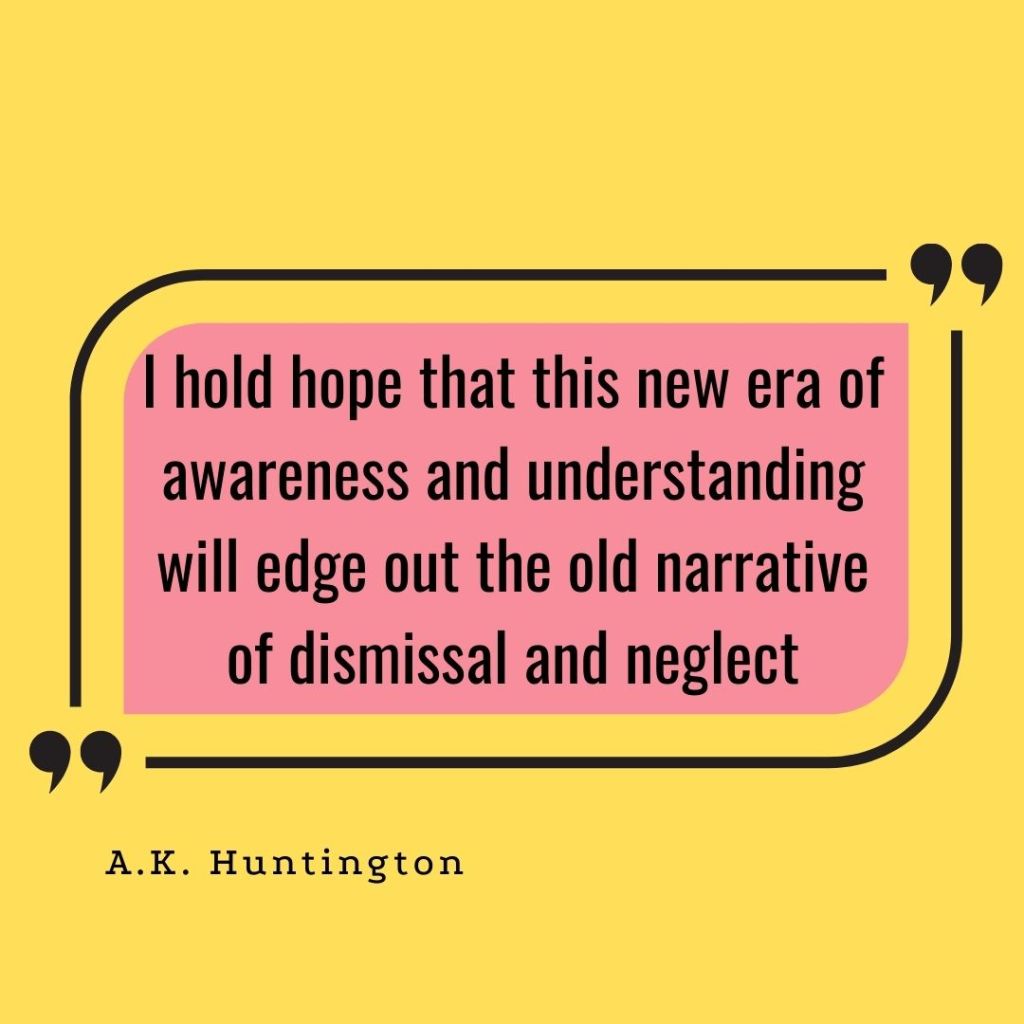
I am so grateful to see the shifts are making headway within our medical systems and I hold hope that this new era of awareness and understanding will edge out the old narrative of dismissal and neglect.
With hope and strength for those still finding theirs, and for us all.
A.K.
P.S. For actual asthma advice you may like to visit Asthma Australia Manage Asthma – Asthma Australia
List of links featured in post:
How emotions can contribute to asthma flare-ups – Asthma Australia
AA2022_Asthma-Anxiety-Depression-A4_v4_web.pdf
AAFA-First-Aid-2023-A4_CMYK_v10_All.pdf (asthma.org.au)
Dysautonomia International: Dysautonomia Awareness, Dysautonomia Advocacy, Dysautonomia Advancement
Clinical Books | Author – Dr. Chris O’Callaghan
What is HSD? – The Ehlers Danlos Society (ehlers-danlos.com)
Australian POTS Foundation – Postural Orthostatic Tachycardia Syndrome
Helpful links with strategies:
Understanding Dysautonomia & EDS | Jeannie Di Bon
Donate to raise awareness, support research and improve the lives of those living with:
POTS: Get Involved – Australian POTS Foundation
HSD: Donate – The Ehlers Danlos Society (ehlers-danlos.com)
Asthma: Asthma Australia : SPRING
Anxiety: Donations form – Beyond Blue
 A.K. HUNTINGTON
Leave a comment